Building the foundations together: reflections from our 2026 annual RDNL Community Platform event
On 9 March, RDNL brought together data professionals from across the Netherlands for our first annual Community Platform event. The event was organised as part of the National Training and Community Platform project,, launched in 2025. The Community Platform aims to strengthen the links between the vibrant communities of data professionals in the Netherlands, share knowledge and experiences, and ensure that the training developed by the RDNL meets the needs of data professionals.
Participants reflected on results from the RDNL Platform project, shared experiences from different communities of data professionals, and collaborated on shared challenges in three breakout sessions. It was a valuable moment to exchange experiences, openly acknowledge challenges, and explore how we can better support one another as a community.
 Plenary sessions
The morning plenary sessions, chaired by Alessandra Soro (TU Delft/RDNL), laid a strong foundation. We opened with a live interview featuring three data and software professionals: Pascal Flohr (Leiden University), Renate Mattiszik (Hogeschool Saxion) and Carlos Martinez-Ortiz (eScience Center), chaired by Tanya van Goch (SURF/RDNL). The panellists highlighted the often-underrated importance of transferable (‘soft’) skills in data stewardship: communication, empathy and navigating diverse stakeholders.
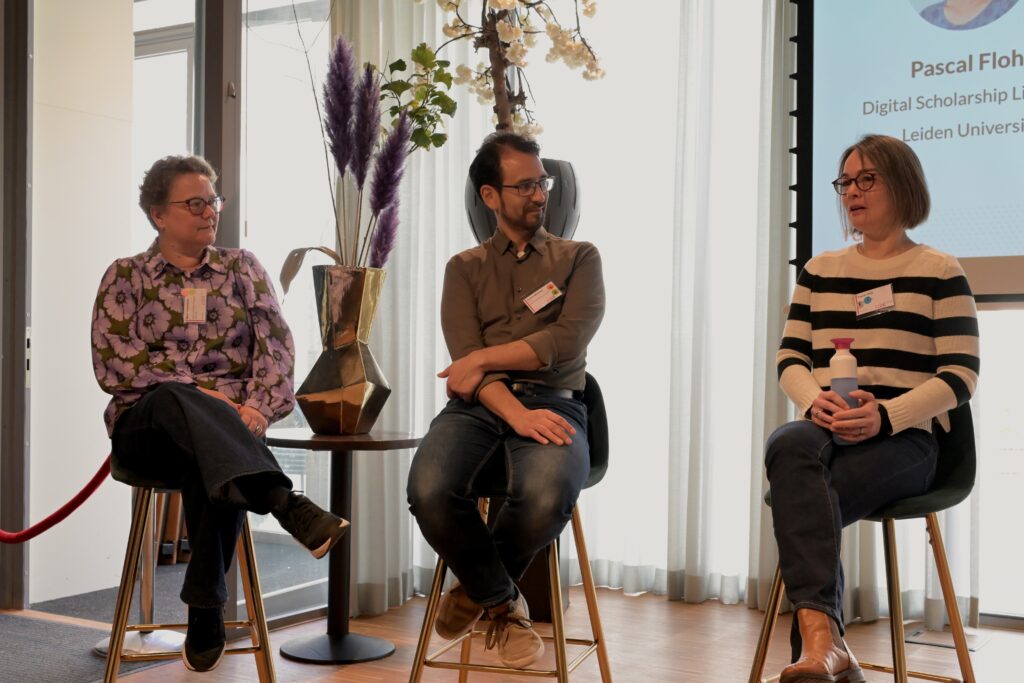
(from left to right) Renate Mattiszik, Carlos Martinez-Ortiz and Pascal Flohr being interviewed on data and software stewardship skills at the RDNL event. © Photo by Mike Priddy
A recurring theme was the need to speak a shared language across roles and institutions. The discussion also touched on major developments shaping the field, such as generative AI, changing roles and expectations of data stewards, as well as increasing time and budget pressure. Above all, one message stood out: data stewardship is a dynamic, multi-faceted role, often a “jack of all trades”, and a collective effort that spans teams and departments.
In the interactive plenary, Dorien Huijser (4TU.ResearchData/RDNL) and Fieke Schoots (Health-RI/RDNL) shared an update on the training platform currently being developed. The goal is clear: to create a central place where data professionals can find relevant training opportunities, aligned with career pathways and responsive to evolving needs. The Curriculum for Data Professionals that was recently published by RDNL serves as the foundation for this.
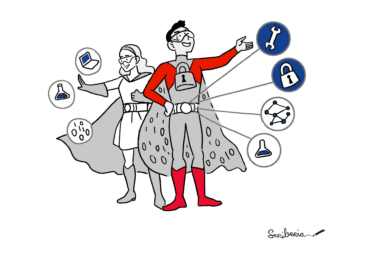
The update was followed by an interactive exercise, guided by Mijke Jetten (Health-RI/RDNL) where participants wrote their “superpowers” on orange and yellow airplanes. Participants spoke about connecting people and translating between policy and practice while supporting researchers in complex data challenges. They described how much of their work involves building trust and bringing structure where things are still unclear or evolving. At the same time, many want to strengthen their understanding of AI and organisational change and become more confident in how they communicate and position their role.
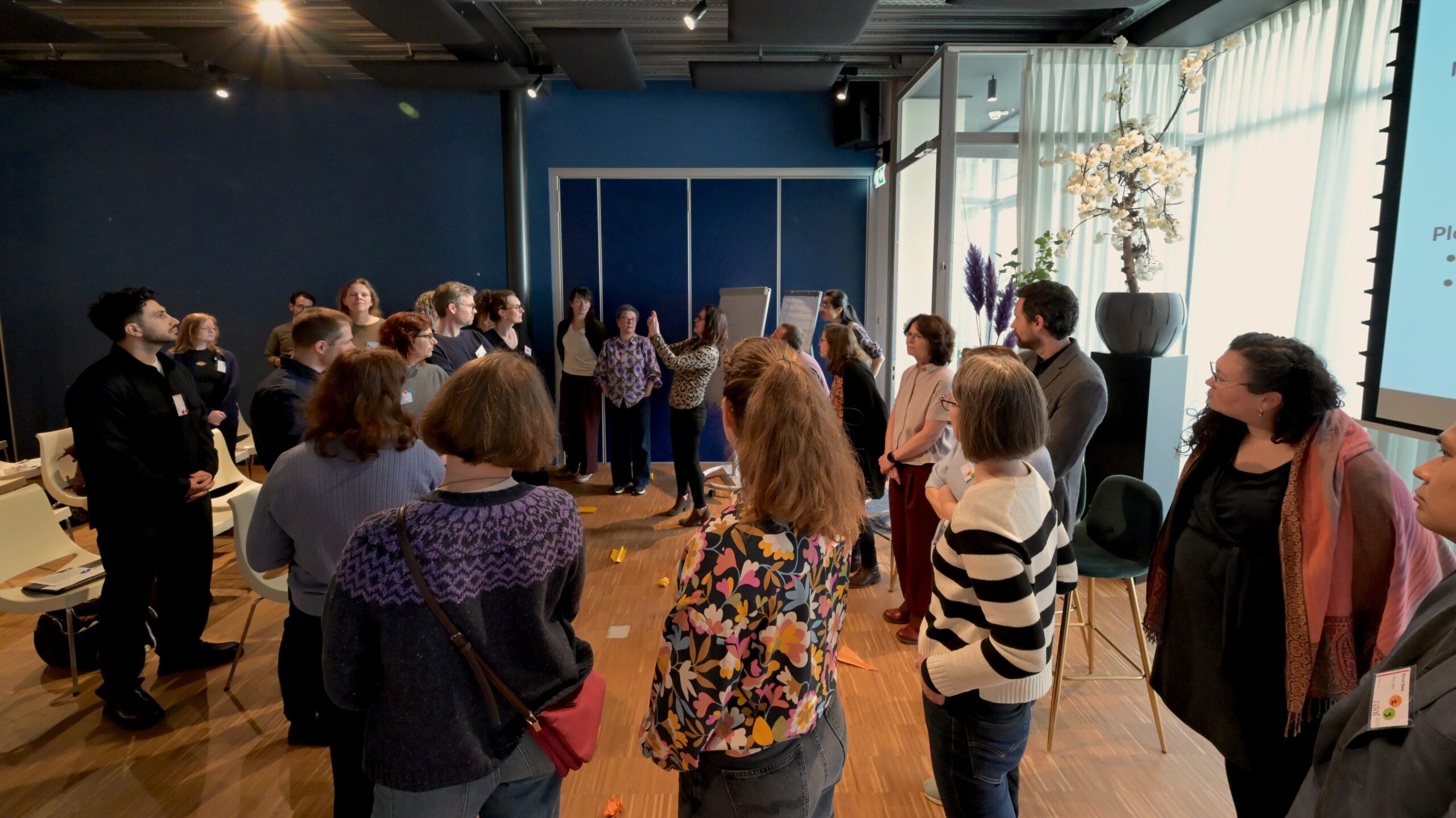
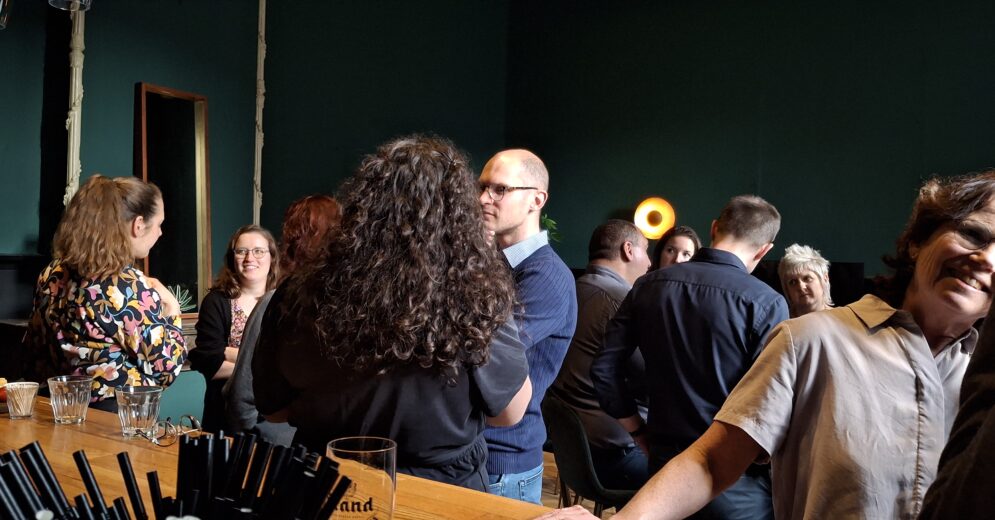
At the RDNL event, participants sharing their “superpowers” in data and software stewardship, from connecting people to building trust and navigating complexity. © Photo by Mike Priddy.
Breakout sessions
The afternoon breakout sessions added depth and energy to the day. In the gamification session led by Bjørn Bartholdy (TU Delft), Stefan Kirsch (Tilburg University) and Anne Mutsaars-Aarts (Tilburg University), the Open Science Against Humanity game tailored to data stewardship created a light and open atmosphere, where participants recognised shared frustrations and day-to-day realities. The game is all about exploring Open Science in a fun, interactive way, celebrating its incredible potential (for humanity) while also unpacking its challenges and pitfalls.
In the learning paths session facilitated by Dorien Huijser and Fieke Schoots, participants explored how different profiles, backgrounds and goals shape what a learning path could look like. Participants got creative and drew ‘learning paths’ with pens, felt tips, pencils, and stickies. Learning paths are used by RDNL to help students connect various trainings to their desired career path or role. The posters that the breakout sessions generated will help RDNL to understand what community members mean with a learning path and which aspects to consider when adding them to the national Training Platform.
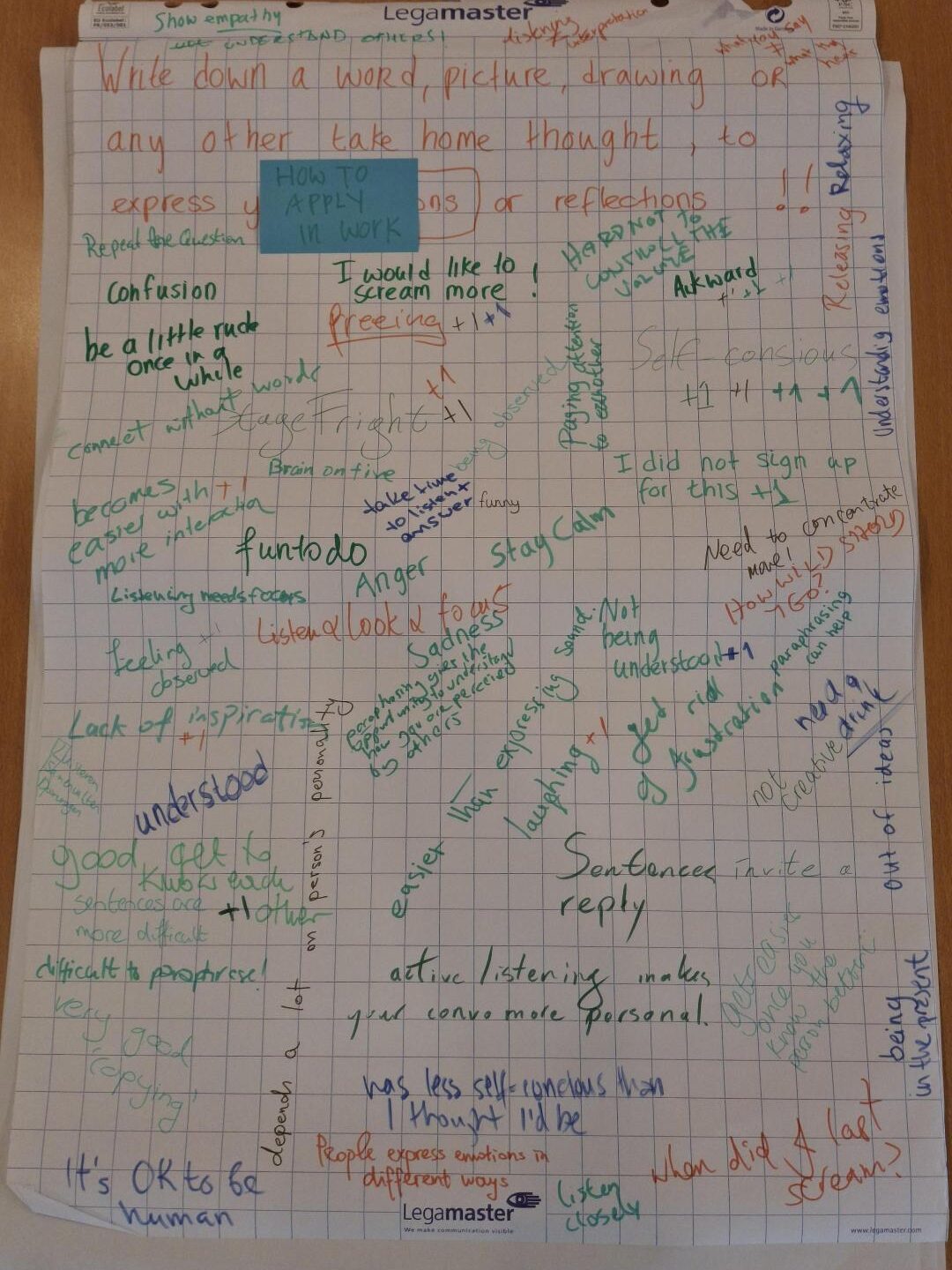
In the active listening session led by Nami Sunami (TU Eindhoven) and Mijke Jetten, the focus was on communication in practice, encouraging participants to step out of their comfort zone and reflect on how they engage with others. It focused on active listening, using techniques from improvisation theater to explore how we engage with colleagues, stimulating to ask better questions and creating space for different perspectives.
At the end of the session, handout with tips for active listening was shared, covering non-verbal and verbal communication, emotional awareness and inclusive language.
On the image on the right, you will see the poster with breakout results from the active listening session, capturing words, emotions and shared reflections.
© RDNL community
Takeaways
In the final session of the day, Simon Saldner (DANS/RDNL) guided participants through the posters created during the breakout sessions as a joint wrap up. This provided not only an overview of the project, but also clarity on where we still need to learn and grow. It reinforced the importance of building a platform that helps people find resources and strengthens connections between communities and roles.
We will take these insights forward as we continue developing the RDNL Training and Community Platform and look forward to reconvening at our next annual Community Platform meeting in 2027. All the materials of the day, including slides, “superpowers”, shared notes of all sessions, the on-site survey results and a detailed report, are available on Zenodo.